OUR IMPACT

British Exploring Society is an authority on transformational youth development through expeditions to remote locations.

Read our latest Annual ReportRead our Sustainability and Inclusion Report

Out in the wilderness everyone is out of their comfort zone, and that’s a great leveller.

Young people’s expectations of themselves and others are challenged. Experiences are shared and futures are shaped.

We believe that young people need the right skills, behaviours, and confidence to tackle contemporary challenges and opportunities. In assessing impact, we consider our success in supporting young people to acquire these skills, behaviours, and confidence through our programmes.

arrow

who we helped in 2025

Our young people come from a wide variety of backgrounds; from communities facing high levels of economic and social deprivation and from those where expectations of personal and professional success are high. Often, these people would never cross paths in any other way.

Our work is transformational for everyone who participates. Wider society also benefits from the adventurous, resilient, adaptable team players we help to create.

145

Young people took part in one or more activities with us

54%

of young people resided in areas of deprivation

20%

were young people in care, who joined us through our partnership with the National Fostering Group.

21%

Disclosed they had at least one disability or long term health condition

One of the greatest gifts we receive each year is a donation in professional time from our volunteer Leaders. Their commitment and skills are critical to the outcomes we seek, to our mission and to our values.

Young people regularly tell us that it is the first time they have been supported by adults who are with them by choice, not obligation.

What we measure

We have a strong intrapersonal focus in our work. We use an introspective tool, the ‘Adventure Compass’, which focuses on self-efficacy, well-being and curiousity.

The Skills Compass

To measure skills development we have an adapted version of the trusted Outcomes Star™.

Used across thousands of organisations, the Outcomes Star helps young people chart their progress in essential areas such as making decisions that matter, managing feelings, problem solving, growing confidence, and working with others.

The Well-Being Compass

To measure well-being we use the academically validated Short Warwick-Edinburgh Mental Well-being Scale. It consists of seven positively worded statements that reflect key aspects of mental well-being.

Young people use the Well-being Compass to rate how often they have experienced each of the seven statements during their time with us. It helps young people gain a clearer understanding of their own well-being and how to manage it, while also allowing us to see the positive impacts we are having.

The Curiosity Compass

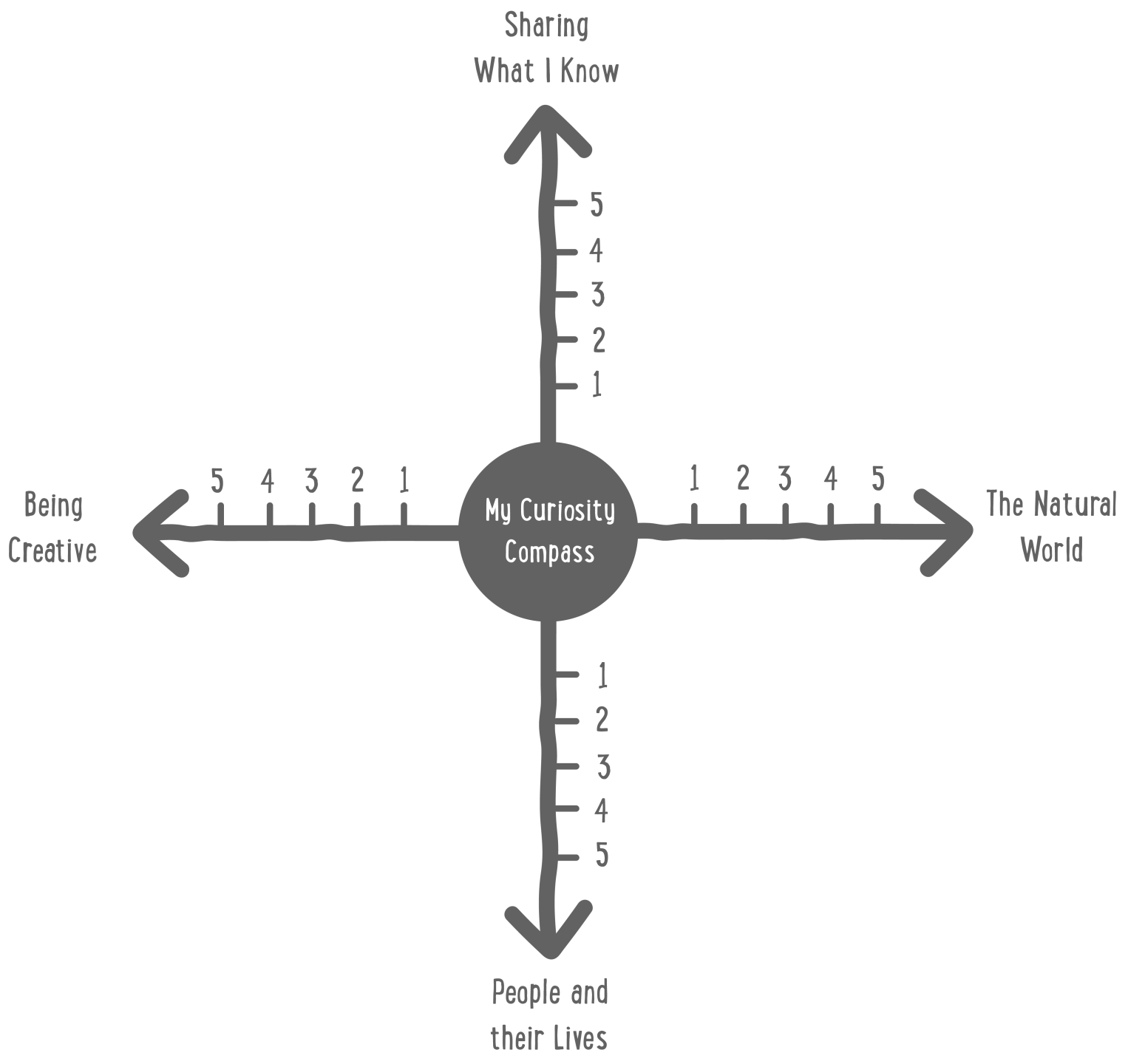
To assess how well we foster curiosity and the appetite for learning new things, we have created the Curiosity Compass.

As a reflective tool, it encourages young people to think about their relationship with the world around them and their place in it. It helps young people think about how they learn, how they share their learning with others, and how that learning may support decisions they go on to make after they complete their adventure with us.
Our impact since 1932

Our Members Survey

In addition to assessing the impact of our present work, we also engage with our long-standing community of Members (former programme participants) to better understand the longer-term impact of our programmes going all the way back to 1932.

We run an annual questionnaire to Members using themes from My Compass and questions originally devised by Penn State University for their research into our expedition programmes, published in 2019.

Participation in the survey is voluntary and not incentivised.


A YOUNG EXPLORER'S JOURNEY

There are several important steps to a Young Explorer’s journey with us. Throughout, we are always available to support them. From beginning to end each step helps them to develop responsibility, confidence, problem-solving initiative, and communication skills.

Watch this short video to find out more.

Research

Penn State University researchers interviewed Explorers who went on expedition with us over 20 years ago to see what impact this experience has had on their adult lives. “This study provides evidence that these long-term influences of expedition experiences can be long-lasting and significant in participants’ lives.” (Ramírez Cañas, 2019)

Studies have found that our expeditions produce profound emotional responses. A period of post-expedition adjustment indicated by all participants showed “changes or examination of values during the expedition experience.” (Allison et al., 2011)

A study on our Greenland 2003 expedition showed significant changes in positive behaviours such as setting priorities, achieving goals, and solving problems efficiently. These behaviours remain core desired outcomes for us. (Stott & Hall, 2003)

Leadership appeared to increase through the expedition and then remain stable, and the application of coping strategies appeared to keep increasing over time.” (Allison et al., 2018)

“Overall it is reasonable to conclude from the evidence that the expedition experiences offered by British Exploring Society are consistent – it does not matter which year you go and where you go – the benefits reported are consistent.” (Allison et al., 2015)

“Expedition participants frequently talked about using their experience on the expedition to direct their lives as they adapted to post-expedition life. This often translated into important decisions about future careers and education.” (Allison, Davis-Berman & Berman, 2015)

Penn State University research